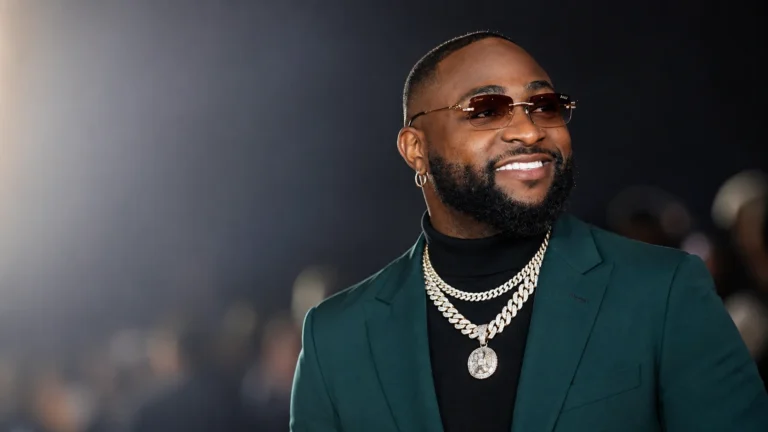

Master P, born Percy Miller, has built an estimated $200 million fortune by turning music success into a diversified business empire. His wealth goes far beyond rap, with major income sources connected to No Limit Records, music royalties, film and entertainment ventures, real estate, and various consumer businesses.
Much of Master P’s success came from his decision to maintain ownership and control over his music rather than simply relying on traditional record-label deals. At the height of No Limit Records, the company generated enormous sales and expanded into movies, clothing, sports management, and other industries. That strategy helped transform Master P from an independent rapper into one of hip-hop’s best-known entrepreneurs. While exact net-worth figures vary because private assets and business valuations are difficult to verify, $200 million remains a widely reported 2026 estimate. A similar music-to-business expansion can be seen in Davido’s career, where recording success has developed into touring, endorsements and other ventures
Master P Net Worth: Quick Facts
| Detail | Info |
| Real Name | Percy Robert Miller |
| Net Worth (Estimated) | Approximately $200 million (public estimates range from $150 million to $400 million) |
| Profession | Rapper, record executive, actor, entrepreneur |
| Born | April 29, 1970, New Orleans, Louisiana |
| Primary Income Source | No Limit Records catalog, business ventures |
Master P’s net worth sits at roughly $200 million by most public estimates, though individual trackers place the figure anywhere from $150 million to $400 million. No major financial outlet has published an audited number, so every figure in circulation, including this one, is a public estimate built from career history and known business activity rather than a verified balance sheet.
Early Life in New Orleans
Percy Miller grew up in the Calliope Projects, one of New Orleans’ most difficult neighborhoods, as the oldest of five children. He played basketball at Booker T. Washington High School before finishing at Warren Easton High School, and that game earned him an athletic scholarship to the University of Houston.
He left Houston after a few months and enrolled at Merritt College in Oakland, California, where he studied business. A small inheritance from a malpractice settlement, commonly cited at around ten thousand dollars, became the seed money for what he built next. That decision, business school over basketball, shaped almost everything that followed.
Building No Limit Records
Miller opened a record store called No Limit Records in Richmond, California, in 1990, and used it to sell independently pressed tapes by local artists, including himself. Two years later, he turned the store into a label of the same name, releasing his own albums before signing acts from his adopted hometown of New Orleans.
Early releases like The Ghetto’s Tryin’ to Kill Me and 99 Ways to Die sold steadily on a regional level rather than through radio play, and Miller reinvested the profits into pressing and distributing more music himself instead of chasing a major label contract. The 1995 compilation Down South Hustlers: Bouncin’ and Swingin’ became the project that pushed No Limit past a purely local audience and caught the attention of larger distributors.
The label’s turning point came in 1995 and 1996, when Miller relocated No Limit to New Orleans and negotiated a distribution deal with Priority Records. He is widely reported to have modeled the terms on Michael Jackson’s record contract, securing an arrangement that let No Limit keep ownership of its masters and the majority of the profits, commonly cited as an 80/20 or 85/15 split in the label’s favor. That single negotiation is the detail most casual retellings of his career skip past, and it is arguably the real source of his long-term wealth, more than any individual album. Modern African music entrepreneurs such as Davido have also combined recording, touring and artist development to build businesses beyond their own music.
With distribution secured, No Limit expanded fast. The label opened offices in Baton Rouge and Los Angeles, signed a roster that included Mia X, Mystikal, Fiend, Soulja Slim, and his own brothers Silkk the Shocker and C-Murder, and built an in-house production team known as Beats by the Pound to keep the release schedule constant. The label’s signature look, bright airbrushed cover art from Pen and Pixel, made No Limit releases instantly recognizable on store shelves.

That ownership structure is the detail most net-worth trackers skip in favor of raw album sales figures, but it explains why his wealth outlasted the label’s commercial peak. No Limit released more than twenty platinum and gold albums between 1995 and 1999, and because Miller owned the masters outright, those catalog rights kept generating income long after the label’s chart dominance faded around 2000.
No Limit’s momentum slowed as Cash Money Records rose to national prominence out of the same city. Miller ended his distribution relationship with Priority in 2001 and moved to a new agreement with Universal Records under a relaunched New No Limit label, a transition that marked the end of the label’s first, most lucrative era.
The Slowdown, and Why It Didn’t End the Fortune
Most artists who lose their commercial peak lose the income that came with it. Master P is a partial exception, because the ownership structure he negotiated in 1996 kept paying out through catalog royalties even after new album sales cooled off.
The label’s decline in the early 2000s coincided with a broader shift in Southern hip-hop toward Cash Money and other newer labels, and No Limit’s roster thinned as key artists left or the label’s release schedule slowed. Miller has spoken about this period as a business lesson rather than a failure: the label had already generated enough owned catalog and enough capital for him to fund ventures outside music, which is exactly what he did through the 2000s and into the following decade.
From Music Mogul to a Diversified Business Portfolio
Master P never treated the record label as the finish line. He used its cash flow and name recognition to move into industries with little connection to music, a pattern that shows up again and again across his career.
1. Film, Television, and Media
He founded P. Miller Enterprises as an umbrella for his entertainment ventures and produced a run of direct-to-video and theatrical films through No Limit Films in the late 1990s and 2000s, including projects he starred in himself. He also launched Better Black Television, a short-lived streaming network aimed at Black audiences, extending his ownership instinct from music into video content.
2. Sports and Retail Ventures
Miller’s basketball background never fully left him. He attempted short professional tryouts in the late 1990s and early 2000s, has pursued front-office and ownership interests connected to sports, and worked in a university athletics capacity more recently. Alongside that, he has run a long-running line of apparel and consumer goods sold under his own branding, an extension of the No Limit tank-top and merchandise business that grew alongside the record label in the 1990s.
His family has stayed part of the business story as well. His son, Percy Romeo Miller, known as Lil Romeo, built a career of his own in music, basketball, and reality television, much of it produced or co-produced through the family’s business network rather than outside studios.
3. Food and Consumer Products
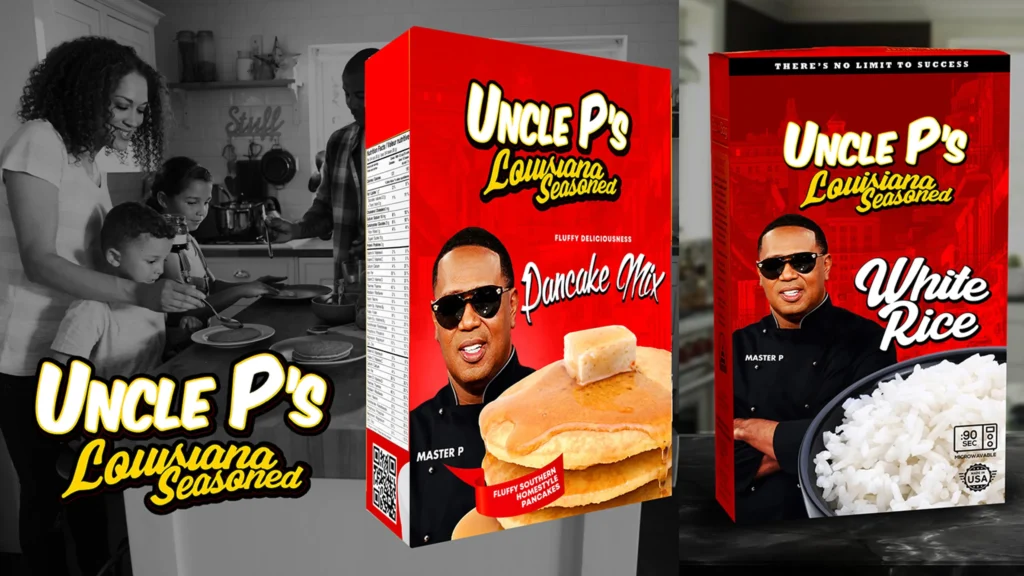
More recently, Miller has pushed into grocery-aisle products, including cereal, syrup, oatmeal, and snack lines marketed under the Rap Snacks and Miller-branded family of products, with part of the stated goal being profit reinvestment into the communities he grew up in. It is a shift from entertainment royalties toward physical retail shelf space, and it reflects the same ownership-first approach that built No Limit.
How Reliable Is the $200 Million Figure
Public net-worth estimates for Master P have clustered around $200 million for close to a decade, a figure that traces back to early tracking by Celebrity Net Worth and has since been repeated, and sometimes adjusted upward toward $300 to $400 million, by other outlets without new audited disclosures behind those higher numbers.
The honest answer is that nobody outside Miller’s own accountants knows the real figure. Music catalog valuations, private business equity, and real estate holdings are notoriously hard to price from the outside, and a rapper turned entrepreneur with decades of overlapping ventures is a harder subject than most. Readers should treat any single number, including the ones in this article, as a directional estimate rather than a confirmed account balance.
Where the Money Comes From
Master P’s income has never rested on one source, and that spread is a large part of why estimates of his wealth have stayed durable even after his commercial peak as a recording artist passed.
The main contributors, based on his public business history, include:
Music catalog royalties from No Limit’s back catalog, which Miller owns outright thanks to the 1996 Priority Records deal. Business income from P. Miller Enterprises and related ventures, spanning film production, apparel, and consumer goods. Endorsement and licensing income tied to his name and the No Limit brand, which still carries recognition value in hip-hop culture. Newer retail and food product lines, a category he has expanded into more aggressively over the past several years. Real estate holdings connected to his business operations, though specific properties and their current market value are not independently verified and are left out of this article rather than estimated.
Each of these sources behaves differently from a wealth-tracking standpoint. Catalog royalties are relatively stable and predictable year to year. Consumer product lines carry more risk but more upside, since a single successful grocery placement can scale faster than a music royalty check ever could. That mix of a stable base and higher-variance new ventures is a large part of why his estimated net worth has stayed in a similar range for years rather than swinging wildly with any single project’s performance.
Master P Compared to His Hip-Hop Peers
Master P belongs to the first wave of hip-hop artists who treated ownership of their masters as the real prize, a strategy that later became standard advice for independent artists. That approach puts him in the same conversation as other 1990s label founders who built lasting wealth through ownership rather than performance fees alone.

He has not reached the billion-dollar tier that a small number of hip-hop entrepreneurs have hit through beverage, fashion, or streaming exits. Within the broader group of artists who founded and controlled their own labels in the 1990s, though, his estimated fortune places him solidly among the more financially durable names from that era, helped by the fact that his income streams never depended on a single hit record or a single industry.