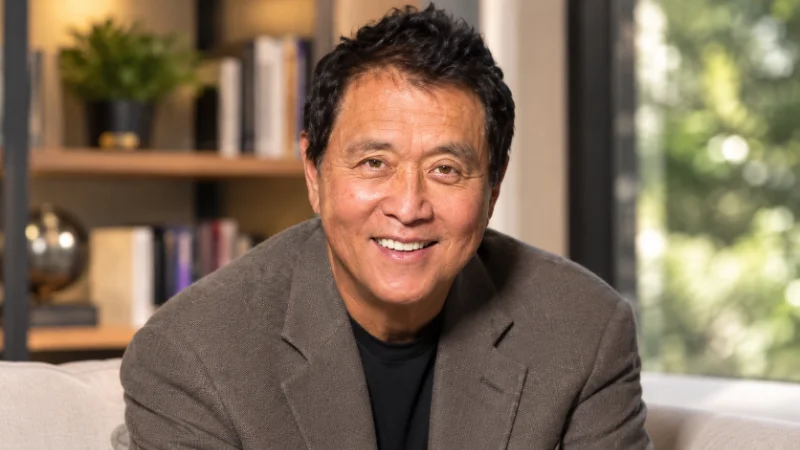
Robert Kiyosaki’s net worth is most commonly put at around $100 million, according to Celebrity Net Worth, the figure cited across most financial media. That number comes almost entirely from decades of book royalties, seminar revenue, and a real estate portfolio he has built since the 1990s. He does not appear on the Forbes Billionaires list, and despite public claims about carrying more than a billion dollars in debt, that figure describes financing on his properties, not his personal financial standing.
Quick Facts About Robert Kiyosaki
| Detail | Information |
| Full name | Robert Toru Kiyosaki |
| Born | April 8, 1947, in Hilo, Hawaii |
| Estimated net worth | Around $100 million |
| Primary income | Book royalties, seminars, real estate, coaching products |
| Best-known work | Rich Dad Poor Dad |
| Home base | Scottsdale, Arizona |
Who Is Robert Kiyosaki
Kiyosaki grew up in a middle-class household in Hilo, where his father worked as an educator and his mother as a nurse. He attended the U.S. Merchant Marine Academy, graduated as a deck officer, and then served as a helicopter gunship pilot in the Marine Corps during the Vietnam War.
After leaving the military in the mid-1970s, he tried and failed at two small businesses, including a nylon and Velcro wallet company that went under. He then sold copiers for Xerox before moving into motivational speaking in the 1980s, running seminars built around the Erhard Seminars Training model. That speaking career, not a finance career, is where he learned how to package ideas about money for a paying audience.
His breakthrough came in 1997 with Rich Dad Poor Dad, a book built around lessons he says he learned from a friend’s father. It became one of the best-selling personal finance titles ever published, translated into dozens of languages with tens of millions of copies sold, and it turned Kiyosaki from a seminar promoter into a household name in money advice.
The book’s core argument, that the wealthy buy assets while everyone else buys liabilities, resonated with readers who felt let down by traditional financial advice. Warner Books eventually picked up distribution, and Kiyosaki appeared on Oprah, Fox News, and PBS specials in the years that followed, exposure that turned a self-published title into a multi-decade franchise. That media run is the real foundation of everything that came after, since it built the audience that still buys his newer books and attends his branded seminars today.
How Robert Kiyosaki Built His Income
Book Royalties and the Rich Dad Brand
Rich Dad Poor Dad is still the backbone of his income. Kiyosaki has since written or co-written more than two dozen follow-up titles, including collaborations with Donald Trump, and the original book continues to sell steadily through backlist royalties, a stream that has paid out for close to three decades.
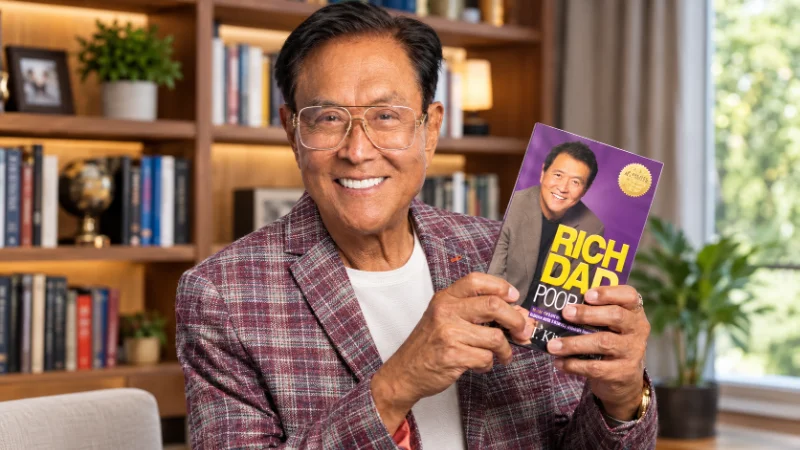
Unlike a typical bestseller that fades after a year or two, Rich Dad Poor Dad has kept selling largely through word of mouth and its ongoing use as a starter text for people new to personal finance. That kind of long-tail royalty income is unusual in publishing and is a big part of why Kiyosaki’s wealth has stayed steady rather than spiking and fading like many one-book authors.
Seminars, Coaching, and Licensing
Beyond books, Kiyosaki built Cashflow Technologies and the Rich Dad Company, which license his name to independent seminar operators and coaching programs. Most of the day-to-day seminar revenue comes from these franchisees rather than from Kiyosaki personally running events, though this arm of the business has also drawn criticism, including a 2012 bankruptcy filing by his company Rich Global LLC after a $23.7 million judgment tied to unpaid seminar-booking fees.
Real Estate, Metals, and Bitcoin
This is the part most quick summaries skip, and it is where Kiyosaki’s real financial strategy actually lives. He does not hold his money in cash or a retirement account. Instead, he uses borrowed money, what he calls “good debt,” to buy rental properties and lets tenants pay down the mortgages over time. He pairs that with long-standing positions in gold and silver, which he has called “God’s money,” and more recently in Bitcoin, which he began buying years ago and has continued to promote publicly through 2025.
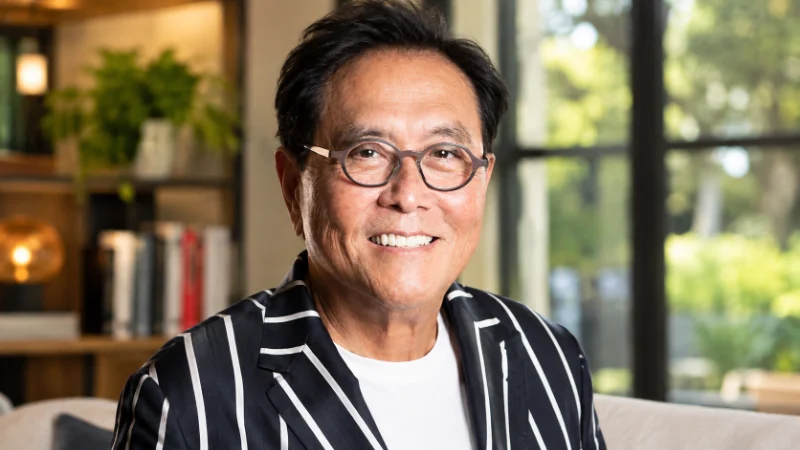
Reporting from Vanity Fair indicates his businesses and investments currently generate roughly $250,000 a month in income, or around $3 million a year, a figure that lines up with a man whose wealth is tied up in cash-flowing assets rather than a single paycheck.
The Billion-Dollar Debt Claim, Explained
This is the genuine confusion point that most articles about Kiyosaki gloss over, and it deserves a straight answer. In January 2024, Kiyosaki said publicly that he was more than $1 billion in debt, and he has repeated versions of that claim since, including a 2025 update putting the figure closer to $1.2 billion.
That statement is true, but it does not mean what it sounds like. The debt is secured against a large portfolio of income-producing real estate, not personal credit card balances or unsecured loans. Net worth is calculated as assets minus liabilities, and Kiyosaki’s liabilities sit against properties that are, in most cases, worth more than what is owed on them.
Celebrity Net Worth, which tracks his estimate at $100 million, has pointed out that nothing in recent reporting changes that number, since the debt is spread across real estate partnerships and secured by the properties themselves. The unresolved question is how much personal equity Kiyosaki actually holds in those partnerships after the debt is paid down, a figure that has never been made public. Kiyosaki has leaned into the confusion on purpose, telling interviewers that if the loans ever failed, “the bank goes bust,” not him, since the debt is structured so the properties themselves stand as collateral.
His wife and business partner, Kim Kiyosaki, has said in interviews that Robert enjoys the shock value of the billion-dollar figure because it opens the door to explaining his broader argument about debt as a wealth-building tool. Whether or not that framing is convincing, the mechanics behind it are fairly standard for large-scale real estate investors, who routinely carry debt many times larger than their personal net worth because that debt is backed by property value, not personal savings.
Robert Kiyosaki’s Net Worth Over the Years
| Year | Estimated Net Worth | Source |
| 2012 | Around $80 million | Forbes, reported at time of Rich Global LLC bankruptcy |
| 2021 | Around $90 million | Celebrity Net Worth |
| 2022 | Around $100 million | Celebrity Net Worth |
| 2023 | Around $110 million | Celebrity Net Worth |
| 2025 | Around $100 million to $120 million | Celebrity Net Worth |
The figure has stayed within a fairly narrow band for over a decade, which fits a business built on steady royalties and leveraged real estate rather than a single volatile asset like company stock.
Where the Money Actually Comes From
Kiyosaki’s income breaks down into a handful of repeatable streams rather than one dominant source.
Book royalties from Rich Dad Poor Dad and its sequels continue to bring in steady backlist income decades after publication, since the titles still sell through retailers and libraries worldwide. Licensing and seminar fees flow in from independent operators who pay to run Rich Dad branded coaching programs and courses, meaning Kiyosaki collects a cut without running most of the events himself. Rental income from his real estate portfolio provides monthly cash flow, the same buy-and-hold strategy he teaches in his books, where tenants effectively pay down the mortgage over time.
Appreciation in gold, silver, and Bitcoin holdings adds to his paper wealth when markets move in his favor, though these positions can also lose value quickly given how volatile crypto and metals prices can be over short stretches. Paid speaking appearances and media interviews add a smaller but recurring stream on top of the rest, and newer ventures like surgery centers and billboard investments are early attempts to add fresh income lines outside his usual real estate and metals mix.
Notable Assets
Kiyosaki lives in Scottsdale, Arizona, and Vanity Fair has reported he purchased his home there for roughly $4.5 million. Beyond that residence, his most significant holdings are interests in a portfolio of apartment buildings and rental properties spread across multiple real estate partnerships, financed with the leveraged debt he discusses publicly.
He has also disclosed positions in gold and silver bullion, a long-held Bitcoin position he has continued to add to, and, more recently, investments in surgery centers and outdoor billboard businesses as he diversifies beyond real estate and precious metals. None of these smaller ventures has a verified valuation attached to it, so they should be read as disclosed interests rather than confirmed dollar figures.
How He Compares to Other Finance Authors
Kiyosaki’s estimated $100 million puts him below some of his closest peers in the personal finance media space. Dave Ramsey, whose wealth also comes largely from real estate plus a media and radio business, is commonly estimated at around $200 million. Suze Orman, another long-running personal finance author and TV personality, sits closer to $75 million by the same commonly cited estimates.
All three figures share the same caveat: none of these public estimates come from audited financial statements, since none of the three run publicly traded companies with disclosure requirements. They are informed estimates built from real estate records, publisher data, and public statements, not verified account balances.
What separates Kiyosaki from Ramsey and Orman is not the size of the fortune so much as the strategy behind it. Ramsey has built his wealth around a media company plus a large, mostly debt-free real estate portfolio, and Orman’s wealth leans more heavily on decades of television appearances, books, and financial products. Kiyosaki is the only one of the three who publicly builds his brand around leverage itself, using borrowed money as both an investment tool and a talking point, which is exactly why his debt claims get more attention than either of his peers’ balance sheets ever do.